
UPDATE: 2024
Below is my personal analysis and theories relating to the horrifying murder of Sophie Toscan du Plantier in West Cork, Ireland, 1996. This was an article that attracted the attention of the case’s prime suspect who reacted to it personally on Twitter in a less than favourable light (as you can read at the end of this article). That suspect– Mr. Ian Bailey–passed away in recent days at the age of 66.
He collapsed in public after suffering cardiac arrest. It was his third heart attack in less than a year. After his first two episodes in 2023, he claimed that it was the stress of the everlasting accusations that had weakened his life. That might be true. But he also led a very hard lifestyle that easily could have compromised his longevity.
To this day I still have substantial doubts that he was the murderer, but without any sense of certainty. Now it appears that if he was harbouring a major secret about Sophie’s death it has gone with him to the grave. His ex-partner Jules, or even Marie Farrell, maybe–just maybe–still have secrets to reveal.
This is a grim reminder that this case has grown quite cold and the sands of time are sweeping away our chances for truth. Hopefully with time also comes peace.
The West Cork Murder Case: Sophie Toscan du Plantier
Sophie Toscan du Plantier was a 39 nine-year-old woman. Wealthy. Attractive. Free-spirited. She left her husband and young son in France for what was supposed to be a quick pre-Christmas 1996 retreat to her rural cottage in West Cork, Ireland. That is where she was found dead. No, not dead. Savagely murdered. Bludgeoned with multiple rocks and a cinder block, her nightclothes snagged in brambles and her body laid open to the sky on the edge of a dirt driving path. It all happened in an area where murders are incredibly rare and the rage exacted on her body was so savage that it only deepened the perplexity of the act.
Still, it gets stranger.
Sophie maintained isolation from her occasional Irish community for the most part. Almost no locals knew what she did with her days or what her visits were suited to. In late December, 1996, only two people in the country likely understood that she was scared–and according to the few accounts of her last days, she was terrified. Terrified, but without explanation.
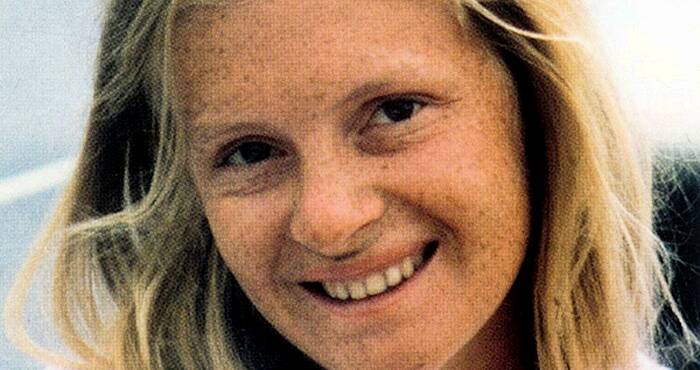
Who or what was she afraid of? Why did she choose to visit her cottage when she did? What did she do during her visit? Who talked to her? Who saw her? Why would anyone want to kill this young mother? And most importantly–who did it? Wide-ranging–sometimes wild–theories implicate illicit romance, organised crime, drugs, wealth, power, and celebrity. Still all roads led to a single suspect who was widely condemned, but with very little evidence. Did he do it? Or was he a patsy?
Here is my analysis as a curious reader and the intuition that comes from living in a very similar rural Irish culture that was witness to Sophie’s final days.
The Murder
Christmas Eve, 1996. At approximately 10am a neighbour of Sophie’s discovered her battered remains along a lane adjoining her cottage.
She was dressed in pajamas including long-john bottoms and boots loosely shoved on her feet. The type of attire you might expect if you were popping out to the road or front garden on a chilly morning before getting dressed. We don’t know if she rushed out in frantic haste or with lazy reluctance. Something brought her to the proximity of the gate that accessed the lane to her house and by the time she reached it, she was attacked. Whatever struggle ensued, the pants were snagged in barbed wire, her skin scratched (presumably by brambles) and her face was so badly damaged that she was hardly recognizable. Blood was on a nearby gate, as well as a concrete block and a piece of slate. Her head had been crushed.
Her house was bizarrely in order with no sign of struggle. She had been in the middle of breakfast when the attack took place–almost certainly in the middle of sawing a slice of bread. Clean wine glasses sat dried next to the sink. The house was tidy and inviting. In fact, from the inside of her cottage refuge, the only hint of a problem was a small bit of blood on the exterior door.
Whatever physical conflict took place, it happened on the dirt lane. No one saw it, no one heard it.
After the 10-am phone call from the no-doubt frantic neighbour, the Gardai (Irish police) arrived quickly, but left her body exposed to the open sky and elements for 28 hours before a pathologist could be summoned. It was Christmas Eve, after all. Not that this should be an excuse for neglecting an important crime scene, but this had taken place in a community woefully unprepared for this level of violence or investigation.
The odds of justice were heavily compromised from the start. The Gardai had likely lost invaluable evidence in the early hours and did not know where to start looking.
Sophie lay in the Irish air and it seems that no one knew what to do or how to do it well.

Finding a suspect
In the same West Cork area where the murder took place lived a reporter and poet named Ian Bailey. He was a local fixture who one might call “eccentric” if choosing to be polite and modest. He was loud, charismatic, intelligent, loved to talk, loved to drink, and arguably cultivated his reputation for peculiarity amidst unabashed self-promotion. He spent several years sporting a long black trench coat, wide-brimmed black hat, and walking about with a staff. His English accent pointed to his origins and identified him easily as a “blow-in”–an outsider.
Bailey, who was about the same age as Sophie and lived in the same area, had a record of violence against women (allegedly especially when drinking). He had even hospitalized his then-partner on one occasion.
That immediately sets him up as the perfect villain archetype.
So when he showed up at the crime scene very early on in his capacity as the outspoken freelance journalist, his presence raised eyebrows. He staked out the area and prodded for information, eventually entangling himself in the crime as the prime suspect.
In fact, the investigation fixated on him almost immediately. If other suspects were seriously considered, talk of it has been relegated to the long-ago dustbin or sealed up tightly in dusty file cabinets. Sophie was dead and an entire community decided that this was the person who picked up the slate rock and cinder block and brought them down on her head.
Let’s try to understand how and why an entire community turned on the man in the black-brimmed hat and if they were right.
Ian Bailey
In his capacity as an ambitious part-time freelance reporter, Ian Bailey arrived at the murder scene sometime between 11:00am and 1:40pm. He may have been the first reporter on the scene. His early presence was regarded as suspicious by local guards, especially after he intimated to persons at the scene that he knew the victim was French. That detail hadn’t been confirmed or widely distributed yet. Could it be that he showed up to the scene of his own crime and had knowledge only a murderer could know?
To be fair, early bits of the crime scene timeline have been debated and confused. Plus, almost certainly many members of the community knew that a French woman owned the place. In small communities like this, people tend to know the provenance of neighbours, homebuyers, and renters. It’s hard to believe that Ian and the whole town didn’t know that the woman who spent time at the cottage was French. It only stands to reason that eager reporters might jump to the conclusion that a woman murdered at the property was its owner. And Ian was certainly eager and happy to push conjecture. He quickly started disseminating theories that pointed to the victim’s home country, almost certainly without concrete evidence. What we don’t know is if he said anything else that raised alarms with local authorities.
As whispers turned to chatter that Bailey could be a suspect, a handful of witnesses informed police that they had seen Ian with scratches on his hands and one scratch on his forehead all in the days following the murder. In the minds of many this transformed Bailey from a strange and menacing blow-in to a man who had clawed through brambles and fought against the young woman on the dirt road.
Further, locals reported that at some point in December there had been a large fire in his yard that disposed of large pieces of trash. Maybe this is how he disposed of apparel or other evidence that could place him at the scene.
Ian countered the accusations with explanations. The marks on his hand and face had come from climbing and cutting down a pine for Christmas, in combination with a slightly botched Christmas turkey slaying–both activities verified by authorities, though not proven to necessarily have caused the scratches. Investigators even tried to recreate the tree cutting to replicate the scratches and were not successful.
Ian also called into question the timing of the bonfire, asserting that he burned some mattresses and refuse well before the crime took place. Investigators sifted through the ash and found no evidence or anything suspicious, and the timing of the blaze was never firmly established.
A serious hitch still remained for Bailey’s claims of innocence–he had no alibi. He insisted that on the evening before the murder, he has his romantic partner, Jules, had been drinking at the pub. Afterward they returned home and went to bed. He later allegedly awoke and left sleeping Jules in bed so he could go and write an article for a brief time, which was supposed to be a common habit. Not only is this unverifiable, it is made even more unreliable given that his version of the night changed at times.
Then, to make matters worse, there was insult heaped on injury. Sometime in the months after the murder witnesses reported that he made callous remarks admitting he did it and laughed about it. To many, this was tantamount to a full confession. When probed about the comments, he always asserted that they were dark sarcastic jokes (made in bad taste), and hardly admissions of actual guilt. In fairness, this would be keeping with his verbose personality.
Marie Farrell
Still, we have yet to get to the most damning part of the case against Ian Bailey. Because at this point, the case turns into a melodrama that is utterly galling given the crime against Sophie.
Enter Marie Farrell. Witness for the investigation.
On Christmas Day, gardai received an anonymous tip via telephone that Sophie had been spotted at the clothing shop of Marie Farrell located in the town of Schull on the Saturday prior to the murder. Sophie had browsed briefly before exiting the shop without purchase. The witness then described a mysterious figure wearing a long, dark trench coat watching Sophie from across the road while she shopped.
Marie Farrell was eventually identified as the tipster. Her account of the Trench Coat Man was the sole sighting of this figure and the details of her recollection have varied. The figure’s height changed. She didn’t recognise Ian as the figure. But then she did.
More damning, Farrell also claimed to have another eyewitness account of the Trench Coat Man–this time on the night of the murder. The tale emerged that she had been driving around with an old boyfriend (unbeknownst to her husband at home) after the couple had a rendezvous at Barleycove beach. They were traveling along a road in Airhill beside the Kealfadda bridge (in close proximity to what would be the crime scene) at approximately 3am when she spied the Trench Coat Man figure with his hands held up to his face. But she could see his face. In the dark, in the brief flash of headlights. She allegedly said nothing to her companion, as there wasn’t any cause for alarm at the time.
At first she wasn’t certain it was Bailey. In fact, she initially indicated it wasn’t him. But then she changed her mind in an official statement. Which she later recanted.
It’s worth noting that the road on which this sighting took place is not a road that connects Bailey’s home with the crime scene.
Marie Farrell’s stories and statements have been all over the map. Let’s be clear about this. Her inconsistencies blemished her credibility and led to many accusations that gardai had coerced her into making statements condemning Bailey.
To make matters worse, this prompted Ian to take justice into his own hands. He had made contact with Marie on multiple occasions–directly and indirectly–in order to discuss the case. In one farcical situation, the two arranged a meeting at a diner during which each was wired with recorders to catch the other one out. An allegedly heavily intoxicated Ian was paranoid and disgruntled toward the gardai, fidgeting with cigarettes and a juke box, and reciting a poem about one officer’s persecution of him. No doubt, his behaviour at the diner was menacing and erratic. This was in keeping with his persona.
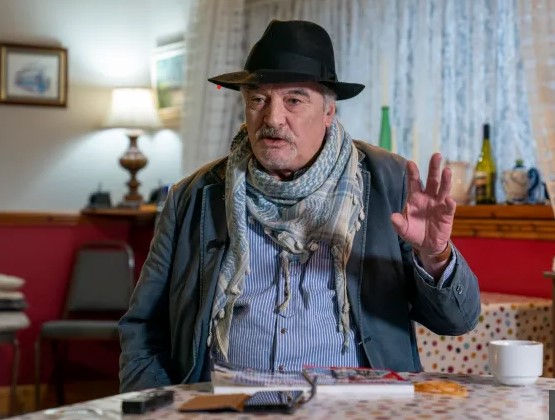
Ian Bailey c. 2021
Marie claimed that while he always maintained his innocence and pleaded with her to admit that her statements had been coerced, he also admitted to being the shadowy figure on the road. She also has accused both Ian and Jules of specifically or implicitly threatening her life.
Marie Farrell is, at best, an unreliable witness. She changed her story several times and would boldly step forward on one day, while hiding the very next. Nothing about her has been consistent.
Why? Some blame the gardai for leaning hard on her to build the case against Bailey. Some blame Bailey for intimidating and threatening her. And still others believe that she is an unwell woman who was seeking attention. Truly, it could be any combination of those. Whatever her motives, Marie’s role has muddied the investigation into Sophie’s death and has inserted chaos into an already bizarre and heinous mystery.
Did He Do It?
Setting aside the Marie Farrell circus and the botched turkey execution and the domestic violence, note that I have made no mention of physical evidence. That is because there is very little and none of what did exist (much of it was lost or destroyed by the Gardai long ago) implicated Ian Bailey. There were no matches to blood or hair, though Bailey voluntarily provided both for examination.
Further, what strikes me most is that no one is even admittedly aware of any connection between the victim and Ian Bailey, apart from the possibility that he could have seen her from afar while briefly doing gardening work at her neighbour’s house–and from that vantage point, she would have been a tiny figure in the distance (if he did actually ever see her). Other than that, there appears to be no known connection between the two.
When laid out, the case against Bailey seems very thin. Yet, investigators have always considered him the prime suspect. Actually, the only suspect.
I will admit that I am surprisingly torn in contemplating the likelihood of his guilt. Logic tells me to follow the evidence, which to the extent it is publicly known does not point to Ian Bailey. Hell, no evidence points to any suspect at all.
Yet, I find it hard to dismiss suspicion of him, based mostly on hunches, observations of human nature, and circumstance. Ian obviously had quite a few demons–demons that, in spite of his sharp wit and clever words, made him forgetful, drunk, violent, erratic, and unpredictable. Ian was the villain archetype and almost seemed to revel in that mold.
Not to mention that the investigators were so doggedly persistent in believing it was him. Do they know something that never publicly came to light? Something must have prompted them to pursue a man to the extent of effectively destroying his public life. Not that I have great faith in authority, but they seemed satisfied and certain that they had “found their man”.
Don’t forget that there was one last damning piece of Ian’s story. He was a blow-in. An outsider. A loud, strange, sometimes violent outsider who seemingly conversed in poetic verse and walked as if he were on a different plane than everyone else. (To understand this, please do watch interviews with this man and witness how eerily captivating he could be).
That’s not good enough, of course. Not for a condemnation of the man, and certainly not for a court case, which is undoubtedly why he has never been charged with the murder (in Ireland–more on that later).
But let us suppose, if only briefly, that Ian could have been the murderer. Here are some scenarios that could possibly implicate Mr. Bailey as the killer.
The Ian Bailey Affair Scenario
One of the most glaring aspects of this story is how violent poor Sophie’s death was. An outsider’s kneejerk reaction to learning of such a brutal slaying is to assume it was borne out of intense rage and/or passion. Someone shattered and demolished her. It’s easy to imagine that forethought didn’t go into the act and pure rage factored into her demise. That points to an acquaintance, family member, friend, or lover of hers.
Could Ian Bailey have been carrying on an affair with Sophie? After all, she had traveled alone to a cottage known to host former lovers.
Maybe Sophie and Ian originally met up to discuss poetry and art somewhere in town where they went unnoticed. He might have turned up in the early morning hours at the gate near her home, drunk and maybe already angry about grievances unknown or maybe with affectionate intention that turned vile. There is no phone record or claim that he drove a car there. So perhaps she spotted his figure through the darkness of the early morning and rushed to meet him at the gate. If she rejected him or insulted him, things may have gone too far very fast.
None of the sources I’ve read or listened to have suggested rumours of an affair, but a well-kept secret is not impossible.
Still, his fingerprints were not found in the house and there is no physical evidence tying him to the property. Plus, as best as we know, none of Sophie’s lovers who visited the cottage were from the West Cork area. That wasn’t her style. With only wild speculation buttressing this theory, it seems weak and unlikely.
The Psychopath Scenario
The final scenario could be that Ian Bailey was simply a highly disturbed man who was walking through the dark night along various local roads and had a psychotic break of sorts, killing a woman he didn’t know for reasons he didn’t understand. Perhaps he never even remembered it. He awoke the next morning realizing something horrible had happened and he burned his clothes, then set out to investigate his own crimes.
If we are to believe this scenario, though it certainly isn’t impossible, it would be peculiar that there were never any other unsolved murders in or near this community in Bailey’s time there. So any “episode” would have been a one-off.
Perhaps He is NOT the Killer
I tend not to put a lot of stock in judging odd people for being odd. So when I scrape away most of the circumstantial evidence that arises from his strange demeanor, fame seeking, sarcasm, and general persona, not a lot is left.
Moreover, I have a problem with how the case instantly became the ballad of Ian Bailey. At some point it feels like investigators and the general public forgot about Sophie and her story. This poor woman had her own demons and secrets, many far away from the town of Schull, and just maybe one of them resulted in her death.
Sophie’s Final Days
Consider the circumstances leading up to her murder: She chooses to fly to her holiday home in Ireland and stay there from 20 to 24 December, leaving her young son (and estranged husband) in France near the height of holiday revelry. The timing of the hastily planned getaway is curious, as are her requests to several acquaintances and family members to join her on the trip (all of them declining for a variety of reasons). Did she wish to have a companion as a witness and protector? Was she leaving France afraid for her life?
If that supposition seems like a stretch, consider that she had an outright scare in her last days. She ventured out on a solo trip to walk along a remote medieval site. Shortly thereafter, Sophie turned up at the doorstep of some nearby acquaintances, acting quite shaken up. She told them she had seen the White Lady apparition near Three Castle Head, which legend says is a sure sign that your death is close at hand. She was said to be quite rattled and left a startling impression on the acquaintances.
Perhaps she was simply a deeply superstitious person. Or perhaps she was already afraid for her life and took this as a certain omen.
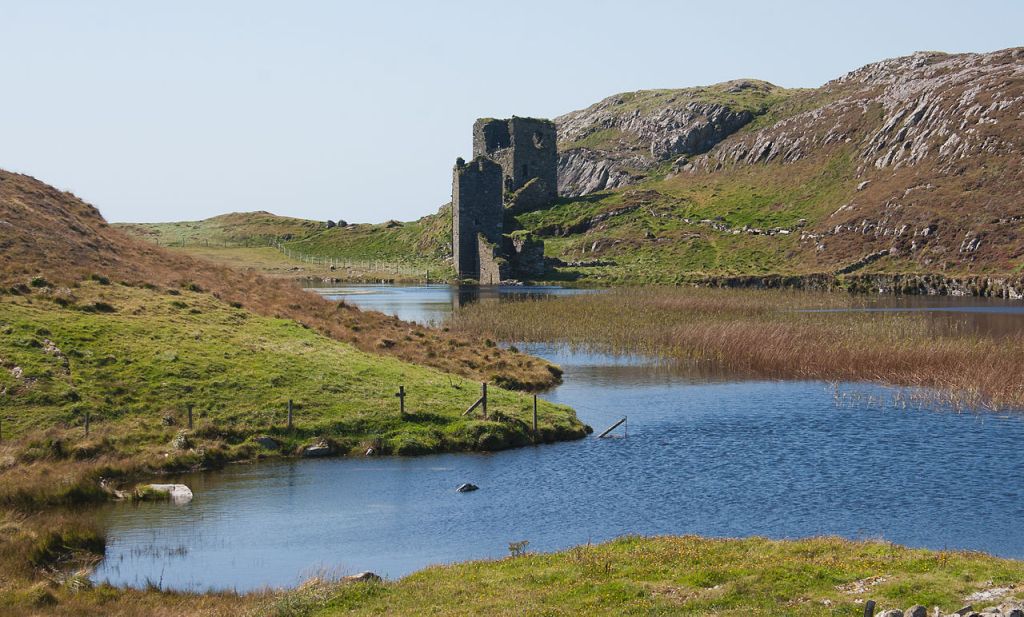
Adding to the atypical behaviour Sophie was demonstrating, she called her estranged husband to announce that she would, in fact, be returning home in time for Christmas with her son–something that had not been established prior to the phone call.
It seems plainly obvious that some part of her life was in turmoil–be it her marriage, her love life, or whatever secrets she may have been holding. Based on this, I will now conjure a theory that her romantic life was her demise.
The Jilted Acquaintance Scenario
To be clear, her husband and her one known lover (who had a known violent history with Sophie) both have solid alibies. But perhaps someone of their mutual acquaintance made the journey to confront her.
Imagine that she returns home, has a glass of wine and does some washing up, placing the clean wine glass on the drying board next to one she had cleaned from the previous evening. Then she gets a visit from someone she knows from abroad they chat, maybe even stay the night. In the morning she sets out a spread of fruits and nuts, puts the kettle on and begins to slice bread. Then they excuse themselves around 6 or 7am, so she slips on her boots to open the gate. Possibly they’ve been fighting, abruptly ending the breakfast and the fight continues as she marches down the lane in her nightgown and jacket. This is when they strike.
Let us assume that her nerve-quaking motive for the trip was to break it off with a menacing lover before the start of the New Year. A fresh start for her. It could’ve been someone from West Cork. Or not. They quarrelled, she demanded they leave, and then the violence exploded. Of course, she wasn’t known to socialize much around West Cork, so finding a lover there is a bit of a stretch. All of her known lovers were from overseas. Physical reports state that the victim had not been sexually active prior to her death (so far as an exam would indicate anyway) so a tryst gone bad is unlikely.
Importantly, there is no evidence at all that this imagined lover would have been Ian Bailey.
The Narcotics Scenario
There is another theory that ties Sophie’s murder to a narcotics trade in West Cork. Now, to me this sounds fairly “out there”, but the rumours are worth considering–especially since they include suspicious activity by the authorities.
The scenario is something to the following effect: Sophie had knowledge of (and potentially communication with) a local cannabis grower. And we aren’t talking about just a few flower pots of herb. This was a major operation.
Her neighbor up the lane from her was said to be a customer of this operation. Maybe Sophie was also partaking–or even moving the stuff. Let’s imagine she was supposed to traffic the cannabis but had issues with logistics or money. Her marital state left her with undefined money issues so she made a quick pre-holiday flight to West Cork to try and settle up. The whole trip had her on edge. This (and maybe smoking a bit of herb) leads to her paranoia about the white spectre at the lake.
Then, early in the morning, she arises and is preparing a breakfast that includes fruits, nuts, and slices of bread to go with tea. Then someone arrives at the gate. She exits and hopes to get the business over with, or orders them to go away. Then it happens. It all goes wrong and she’s bludgeoned.
The grower connected with the herbal enterprise was known to receive highly preferential treatment from the law in trade for help with the case against Ian Bailey. Maybe this is why so much physical evidence was missing or inconclusive–collusion between the grower and the authorities. Because, yes, a lot of evidence “went missing” and things were botched that shouldn’t have been.
But this scenario requires a trip down conspiracy theory lane. It isn’t impossible, but requires mass coordination and a level of ruthlessness that is not typical of West Cork. There have been no other recorded murders of such brutality, so this would have been exceptional for the cannabis ring to be violently reactionary only on this one single occasion. Plus there is zero known connection between Sophie and any marijuana usage or dealing.
I highly doubt this theory is correct.
The Hitman Scenario
It is also worth discussing the possibility of a hitman. As I mentioned before, the vicious nature of the murder certainly doesn’t point to a “professional”. However, the killer needn’t have been a “professional” to be hired for murder. He may have known Sophie. Or not.
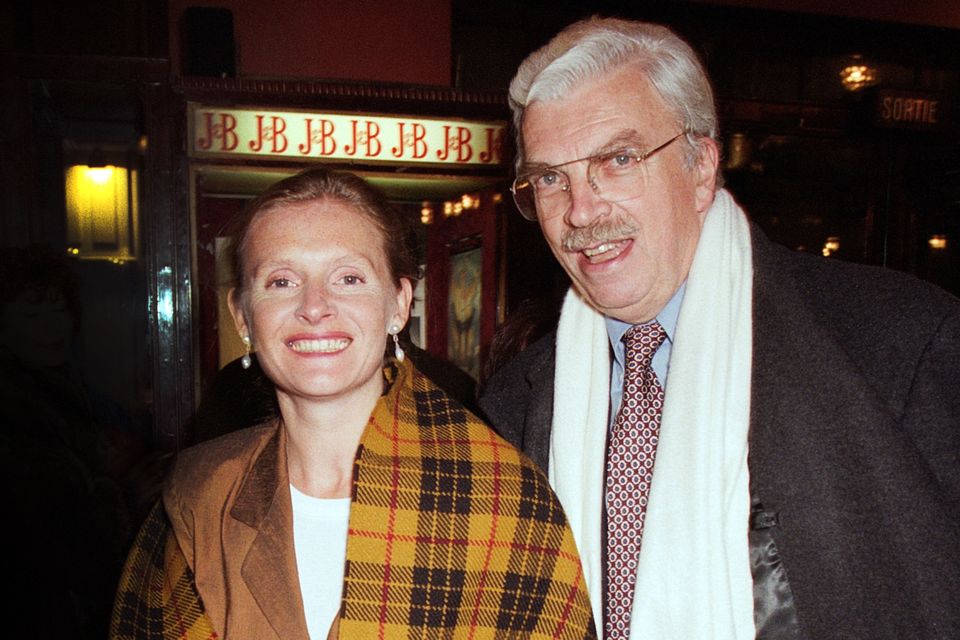
Sophie With Her Husband, Daniel
What we do know is that her well-connected husband was a semi-famous French film producer facing an expensive divorce and was reportedly already in financial difficulty. Might he have sent someone to dispatch her? A gruesome act to fix an ugly domestic situation–maybe even keeping salacious stories out of headlines.
In such a dark situation, he may have threatened Sophie’s life and she fled to regroup at her cottage. She wanted companions for advice and safety, but couldn’t/wouldn’t tell them why. She was frightened of the threat and could have believed it was within his means and influence. So when she called her husband to–allegedly–announce that she was coming home for Christmas, it might have actually been a continuation of the rift via phone. Maybe she was never planning to go home for Christmas. We will never know what was said between them for certain.
Perhaps the event went something like this:
It was early morning hours, along the lines of 6 or 7am. Sophie was up and had already eaten a quick breakfast (her autopsy points to fruit and nuts in her digestive system, and a loaf of bread in her kitchen seems to be partially sliced). Still in her nightclothes, she discovers that someone is at the gate, so she slips her boots on loosely and tromps down to see who it is. This is her killer. He tries to grab her, maybe intending to put her in the car or pull a weapon, but she fights back too well and too quickly. So he panics and improvises using stones within his reach, then realizing the job isn’t quite done, he walks over and grabs a cinder block for the coup de grace. He’s wearing gloves and a cap to avoid hairs and fingerprints. His long-sleeved winter attire means none of his blood is left at the scene either. He goes back to the house for reasons unknown (retrieve something? clean himself up?) and then gets back in his car and immediately leaves town. It will be another few hours before Sophie’s neighbour drives down and discovers the scene.
Her husband passed in 2003, so if this was the truth–and this is what seems to be the most likely scenario to me–we will almost certainly never know. The murderer probably left Ireland by Christmas Day, 1996 and will never be caught.
Conclusion
I feel for poor Sophie who spent her last day in solitude and at least partially in fear. She was in a land of strangers and departed this world in a horrendously violent way. I know that cementing the idea of Ian Bailey as the killer would be comforting to a lot of people around her for the closure. A face to blame is a very important thing, and it ascribes a level of peace to the woman’s memory.
Maybe Ian Bailey was the murderer. Her family seems to think so, as her now-grown son has been publicly vocal about his belief in Bailey’s guilt. A French court seems to think so–he was tried in absentia and found guilty of the murder in 2019 and sentenced to 25 years in prison (he never served time as extradition efforts failed–his attorney referred to it as a “show trial”).
But there is too much coincidence, paranoia, money, and international intrigue at play to convince me that he killed her. There is a very good chance he was innocent. Whatever happened, the secrets are probably long buried, never to surface again.
Update, July 2021:
In fairness to Mr. Bailey, below is what appears to be his reaction to this article via his Twitter account:
“I note a Little Devileena called Katie seems to have forgotten the teaching of The Bhuddas Eight Nobel Truths which forbids false accusations… Because I am a Christian I am able to forgive those who trespass against me..IKBO”
To this I reply humbly that I absolutely am not accusing any person of any crimes whatsoever. As an amateur sleuth, armchair quarterback, and outsider completely unconnected with this case, I have merely presented plausible scenarios for the crime, some more outlandish than others. I believe the full article conveys my stance that Mr. Bailey is not, in fact, the murderer. If I were forced to stake money on it, I think this was a hit ordered by her husband. However, I have no way of knowing whatsoever and cannot in good conscience speak with any confidence on the accuracy of any of the explored scenarios.
I regret if Mr. Bailey, or any other person mentioned in this article, feels trespassed upon.
 Katie Using Words
Leave a comment